Which AI Voice Agent Should You Use in 2026? Our Top Picks
Companies today are facing increasing call volumes, higher customer expectations, and tighter budgets. Traditional tools can no longer keep up. So what can you do?
AI voice agents have emerged as a practical solution. They have evolved from simple assistants to systems that qualify leads, resolve routine issues, schedule appointments, automate follow-ups, and support human agents in real time.
This shift is accelerating. By the end of 2026, 40% of all enterprise applications are expected to include task-specific AI agents. Advances in multimodal reasoning, sentiment-aware models, and production-grade automation now allow AI voice agents to manage complex conversations with speed and consistency.
The result is faster response times, improved service quality, and a level of operational efficiency that was previously unattainable. Here are the top AI voice agents leading this transformation.

Best AI Voice Agents (A Quick Comparison)
| Platform | Best For | Starting Price (Billed Annually) |
| Nextiva XBert AI | Enterprise and SMB teams that want an AI voice agent built directly into a unified communication platform for calls, routing, triage, scheduling, and automated follow-ups | $99 per month for 99 interactions, then $0.99 per additional interaction |
| VoiceFlow CX Intelligence | Product, CX, and automation teams that need advanced conversational flows with deep customization and multi-model support and organizations that want control over logic, reasoning, and integrations | Custom pricing based on usage and automation volume |
| Cognigy.AI | Large enterprises with complex customer service operations that need high-accuracy AI voice flows, process automation, and deep integrations with CRM and ticketing stacks | Enterprise-only pricing available on request |
| Synthflow | Startups, solopreneurs, and lean teams that want a simple, fast way to deploy AI voice agents for inbound calls, lead capture, and appointment scheduling | $375 per month for 2,000 minutes, with pricing adjusting based on call volume |
| PolyAI | High-volume contact centers and service industries that require natural, human-like AI conversations for reservations, order management, and customer support | Custom pricing based on call volume and deployment scale |
What Exactly Is an AI Voice Agent in 2026?
In 2026, an AI voice agent is no longer a simple bot that converts speech to text or follows scripts. It is an autonomous software system that can understand natural speech, reason in real time, and take action across your business tools — over the phone, through apps, or across any customer channel.
This is a significant evolution from legacy IVR (“Press 1 for sales…”) and basic chatbots. Today’s breed of AI voice agents is designed for genuine conversations and practical applications. They are:
- Conversational: They sound human, with natural tone, pacing, interruptions, and back-and-forth flow.
- Contextual: They track context from earlier in the call and even from previous interactions with the same customer.
- Action-oriented: They can create tickets, update CRM records, send follow-ups, schedule appointments, and run workflows, not just answer questions.
- Always-on: They operate 24/7 without fatigue and escalate intelligently to human agents when needed.
These capabilities make them a reliable extension of your support and sales teams rather than a simple automation tool.
Key Capabilities of 2026-Grade AI Voice Agents
Below are the core capabilities that set modern AI voice agents apart from older IVR systems and basic chatbots.
- Natural, human-quality voice
AI voice agents now sound nearly indistinguishable from real humans. They use natural tone and human-like speech patterns, handle interruptions smoothly, and adjust their emotional tone based on urgency or customer sentiment.
- Real-time reasoning
They use low-latency language models to respond instantly and make decisions on the fly. These agents can reference customer history, policies, and knowledge bases mid-conversation without breaking flow.
- Multi-step workflow execution
Modern voice agents can complete multi-step tasks such as identity verification, refunds, scheduling, or ticket creation. They connect to your tools via API and execute workflows that previously required multiple agents.
- CRM and phone system integration
They integrate cleanly with major CRMs and contact center systems, syncing data automatically as they work. With PSTN and SIP connectivity, they seamlessly integrate into existing call flows without requiring a full system rebuild.
- Autonomous inbound and outbound conversations
AI agents can independently manage everyday inbound tasks, such as routing, FAQs, troubleshooting, and scheduling. They also run outbound campaigns for renewals, lead qualification, billing reminders, and surveys.
- Cross-channel continuity
These agents operate across phone, SMS, email, chat, and in-app voice with consistent context. A customer can switch channels mid-interaction without repeating themselves, creating a seamless experience.
Why they’re replacing IVR, legacy call centers, and old chatbots
- IVR is rigid: Traditional menus break as soon as a customer says something unexpected. AI voice agents can handle open-ended language.
- Human-only scaling is unsustainable: Hiring and training cycles, rising labor costs, and high agent turnover make it impossible to keep pace with demand.
- Old chatbots were rule-based: They couldn’t adapt, reason, or complete multi-step tasks across systems.
AI voice agents don’t replace human teams — they elevate them. They automate repetitive, high-volume work, allowing agents to focus on complex cases, relationship building, and conversations that genuinely require a human touch.

How To Choose the Best AI Voice Agents
Not all AI voice platforms perform equally once real customers, real call volume, and real workflows are involved. To help teams make informed choices, here are the seven factors that matter most.
- Accuracy and naturalness: A strong platform understands callers in noisy environments, speaks naturally in multiple languages, and handles interruptions and corrections without breaking flow.
- Latency: Fast response time is essential. Leading systems support real-time streaming and maintain low latency even during peak hours or high call loads.
- Reasoning and memory: Modern AI agents should be able to handle long conversations, maintain context, and utilize advanced language models that can reason rather than merely repeat patterns.
- Integrations: The best platforms connect easily to CRMs, ticketing tools, billing systems, and existing telephony setups. Flexible APIs and webhooks allow custom workflows.
- Deployment readiness: Look for enterprise-level security, encryption, proven uptime, monitoring, and governance tools such as audit logs and change history.
- Special capabilities: Some platforms offer industry-specific features for healthcare, finance, retail, or telecom, along with multilingual support, outbound automation, and regulatory compliance.
- Pricing clarity: Transparent per-minute or per-seat pricing helps avoid unexpected costs as usage grows.
With these criteria in mind, here is a clear look at the top AI voice agents of 2026 and the use cases where each delivers the strongest results.
The Best AI Voice Agents in 2026
1. Nextiva XBert AI — Best overall AI voice agent for enterprises and SMBs in 2026
Nextiva XBert AI is one of the most capable AI-powered voice agents available for both small businesses and enterprise teams. It combines phone, SMS, chat, CRM context, and automation into one unified communication platform.
Instead of juggling multiple disconnected tools, Nextiva XBert AI provides businesses with a single AI system that can answer calls, understand intent, qualify leads, route conversations, book appointments, and deliver real-time insights.
For companies that want a reliable, professional, always-on front desk without expanding headcount, XBert delivers an enterprise-grade upgrade built for speed, scale, and customer clarity.
Top features of Nextiva XBert as an AI voice agent
- AI smart answering and routing: It instantly handles calls, identifies caller needs, and sends conversations to the right team member with no phone trees.
- Built-In CRM context: Customer details, call history, and notes appear automatically for more personalized interaction.
- Unified omnichannel messaging: Phone, SMS, chat, and web messages live in one inbox, so nothing gets lost.
- Real-time analytics and trends: Leaders can review call volume, booking activity, missed opportunities, and after-hours performance.
- Fast activation and customization: Setup takes minutes. Greetings, scripts, call flows, and voice preferences can be easily updated at any time.
- Scalable for growing teams: It manages multiple simultaneous calls and adapts as the business grows.
Pros and cons of Nextiva XBert as an AI voice agent
| Pros | Cons |
| All-in-one platform with phone, CRM, and automation seamlessly integratedExtremely fast setup with no technical expertise neededHandling of calls, SMS, and chat from one placeExcellent for service businesses, franchises, and multi-location teamsStrong analytics and monitoring for visibility into performance30-day money-back guarantee | Additional cost for some advanced integrationsNo free trial |
2. VoiceFlow CX Intelligence — Best AI voice agent for customer support
VoiceFlow CX Intelligence is a purpose-built platform designed for teams that want to design and deploy advanced AI agents across both voice and chat channels. Unlike rigid support bots, VoiceFlow enables product, CX, and engineering teams to collaborate in a single, unified environment, building agents that converse, type, learn, and assist customers with human-like intelligence.
With deep customization, visual flow design, code-level extensibility, and powerful API integration, VoiceFlow enables the easy launch of support agents that can handle high volumes of conversations, resolve a significant percentage of tickets, and scale across multiple channels.
Top features of VoiceFlow CX Intelligence as an AI voice agent
- Human-like voice agents: Build and deploy voice agents capable of natural, fast, multi-turn conversations for customer support and call automation.
- Deep chat agent customization: Create chat agents with flexible interfaces, data sources, and logic tailored to your support workflows.
- Visual + code hybrid builder: Blend drag-and-drop flows with code editors and functions for advanced behavior and logic.
- Powerful integrations: Connect agents to CRMs, support systems, knowledge bases, APIs, and internal tools for full-context automation.
- LLM-agnostic architecture: Use the LLMs you trust (OpenAI, Anthropic, Google, etc.) and switch models without vendor lock-in.
- Collaboration-ready workspace: Built for teams — designers, developers, and CX leaders can build together in real time.
Pros and cons of VoiceFlow CX Intelligence as an AI voice agent
| Pros | Cons |
| High customizability, from simple flows to enterprise-grade logicSupport for voice, chat, and complex customer support automationsDeep integration with APIs, CRMs, ticketing tools, and data sourcesCollaborative workspace ideal for CX, product, and engineering teamsLLM-agnostic architecture to avoid long-term vendor lock-in | Longer setup time than plug-and-play AI agentsPotential developer contribution for advanced features Not ideal for businesses wanting a ready-made, out-of-the-box agentPotentially overwhelming for non-technical users initiallyPricing that may scale with usage and team size |
3. Cognigy.AI — Best enterprise-grade voice + chat automation for large-scale use
Cognigy.AI is a leading enterprise platform for large organizations that need AI agents capable of handling millions of conversations across voice, chat, and digital channels. Built for scale, stability, and deep integration, Cognigy powers AI-driven customer service for global brands including Toyota, Nestlé, Lufthansa, Henkel, and major airlines, telecoms, and financial institutions.
Unlike lightweight tools designed for SMBs, Cognigy delivers high-performance automation that understands complex intent, connects to enterprise systems, and resolves customer issues across phone, messaging, and digital channels. With advanced NLU, real-time translation, agent copilots, and extensive operational visibility, Cognigy is the platform enterprises choose when automation must be reliable, intelligent, and global.
Top features of Cognigy.AI as an enterprise AI voice + chat platform
- Enterprise-grade voice automation: Build and deploy voice agents that handle high-volume, human-like phone conversations with 99% routing accuracy.
- Advanced chat + messaging support: Deliver consistent support across all digital channels with rich AI-powered automations and personalized responses.
- Agent copilot for human teams: Provide service agents with real-time coaching, summaries, next-best actions, and instant access to knowledge bases.
- Global language support: Leverage real-time translation and multilingual NLU to serve customers in any language across markets.
- Deep integrations: Connect seamlessly to CRMs, contact center platforms, knowledge systems, and enterprise back-ends.
- Built for massive scale: Proven to automate millions of interactions per year with high reliability for the world’s largest brands.
Pros and cons of Cognigy.AI as an enterprise AI voice agent
| Pros | Cons |
| Powerful enterprise-grade automation for both voice and chatProven at massive scale (millions of automated interactions)Real-time translation and multilingual capabilitiesExtensive integrations with enterprise CRMs and contact centersSupport for hybrid AI: automation + agent copilots | Higher cost compared to SMB-focused platformsNeed for technical and operational resources to implementOverkill for small businesses with simple use casesComplex setup for teams without existing infrastructureBest suited for organizations with a long-term automation strategy |
4. Synthflow — Best no-code/quick-deploy voice agent for SMBs and fast launch
Synthflow is designed for teams that want to deploy AI voice agents quickly without the need for engineering, lengthy setup cycles, or extensive infrastructure. It combines a visual flow designer, in-platform telephony, automated QA, and a proven rollout framework that lets businesses launch production-ready agents in weeks, not months.
Synthflow’s in-house telephony network (not third-party carriers) gives it unmatched reliability for small businesses and fast-moving teams that need enterprise-grade performance without enterprise complexity.
For SMBs, real estate teams, healthcare reception, restaurants, and service providers that want instant call handling, booking, qualification, and customer support, Synthflow delivers the simplest path from idea to ROI. It is one of the most accessible “plug-and-launch” voice AI platforms on the market today.
Top features of Synthflow as a no-code voice AI platform
- No-code flow designer: Build call flows visually with drag-and-drop steps, business logic, API actions, and real-time testing.
- In-house telephony: Synthflow manages its own carrier-grade network for ultra-low latency, high uptime, and superior call quality.
- BELL framework for safe deployment: A built-in lifecycle system (build, evaluate, launch, learn) ensures that each agent is thoroughly tested and optimized before going live.
- Auto-QA and real-time monitoring: Every call is analyzed automatically for accuracy, compliance, and improvement opportunities.
- Industry-specific templates: Pre-built voice agents are available for real estate, restaurants, healthcare, e-commerce, and more.
- Multi-agent architecture: Subflows function as modular mini-agents, handling specialized tasks within a larger workflow.
Pros and cons of Synthflow as a no-code voice agent
| Pros | Cons |
| Extremely fast deployment — ROI in weeks, not monthsIn-house telephony for low latency and 99.99% uptimeNo-code builder to make call automation accessible to SMBsAuto-QA and testing to remove guesswork from launchStrong real-world performance with 65M+ customer calls handled | Less flexible than developer-first platforms like OpenAI RealtimeLimited profound custom logic for very complex enterprise needsThe feature set may exceed what small teams need (can feel heavy)Not as customizable for niche or experimental voice use casesHigher tiers needed for advanced integrations and analytics |
5. PolyAI — Best for human-like conversations at scale in 2026
PolyAI is known for delivering some of the most natural-sounding AI voice agents in the industry. It is designed for enterprises that need to automate large volumes of calls without losing the emotional intelligence, consistency, and clarity customers expect from a skilled human agent. Global brands trust PolyAI in hospitality, insurance, retail, telecom, and travel because it delivers lifelike conversations across voice, chat, SMS, and social channels.
With support for over 45 languages, superior call handling accuracy, and advanced AI features, PolyAI enables organizations to create personalized experiences at every touchpoint while scaling seamlessly to millions of interactions.
PolyAI is the ideal choice for creating lifelike conversations on a global scale. Its combination of natural speech, multilingual capability, and enterprise reliability makes it a leader for brands that need every customer to feel heard instantly, every time.
Top features of PolyAI for enterprise-scale voice automation
- Human-like conversational quality: Build AI agents that speak naturally, handle interruptions, and respond with emotional intelligence.
- Omnichannel capability: Ensure consistent brand voice across voice, chat, SMS, and social.
- Massive language coverage: PolyAI supports over 45 global languages for international operations.
- Powerful automation: It handles bookings, authentication, account changes, troubleshooting, order management, and more.
- Real-Time analytics: It surfaces insights for CX improvements, sentiment trends, and operational optimization.
- Enterprise-ready security: It offers built-in compliance for regulated industries with robust guardrails and data protection.
Pros and cons of PolyAI as a voice agent platform
| Pros | Cons |
| Industry-leading realism and natural dialogueSupport for more than 45 languagesGood performance in noisy or unpredictable call environmentsStrong global brand adoption in hotels, retail, and utilitiesOmnichannel consistency across voice, chat, SMS, and social | Higher price point for large-scale enterprise deploymentNeed for enterprise-level resources for implementationNot ideal for small businesses with simple needsHeavy reliance on AI training for best resultsMore complex than no-code SMB platforms |
Nextiva XBert: The Smartest AI Agent Choice for Modern Teams
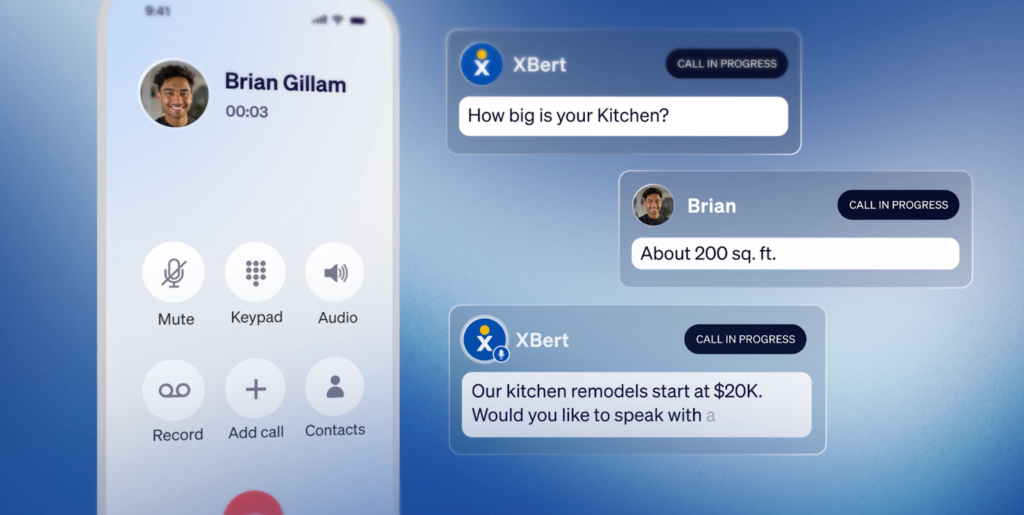
Nextiva XBert stands out as one of the most practical AI answering services for small and growing businesses. It combines AI call handling, smart routing, voicemail-to-email, CRM context, and unified communication tools in one platform. For busy owners who need reliable coverage without hiring more staff, XBert delivers speed, consistency, and a professional customer experience every time the phone rings.
XBert is designed for teams that want to onboard quickly, automate repetitive tasks, and maintain organized communication across all channels.
What small businesses love about Nextiva XBert AI
- Easy onboarding so teams start using AI call handling in minutes
- 24/7 call coverage to ensure customers are heard even after hours
- Unified communication across voice, SMS, email, and chat in one place
- Custom greetings and location-based call rules that create a professional image
- Real-time analytics that show call volume, missed opportunities, and team performance
- Low total cost of ownership compared to hiring or outsourcing reception
Proof that Nextiva delivers real business value
- Nextiva powers over 100,000 businesses across the United States.
- More than one million users rely on Nextiva for communication and customer experience.
- 94% of companies report ROI from their CX investments, showing the value of better customer handling.
SMBs need coverage that works even when they are not open
The best AI receptionist for small businesses should work reliably, reduce stress, and help teams stay responsive and professional. Nextiva XBert gives SMBs a smart way to answer every call, organize their communication, and deliver a better customer experience without increasing overhead.
It is built to help modern teams stay connected, efficient, and focused on the work that matters.
AI Voice Agents Are No Longer Optional
AI voice agents have become essential in 2026. Companies adopting them early are already gaining a clear edge through faster response times, lighter workloads, and more consistent customer experiences.
As adoption accelerates, organizations are prioritizing platforms that integrate smoothly with the systems they already trust. The goal is simple: Improve the communication stack without forcing a costly rebuild.
This is where Nextiva XBert AI stands out. It brings AI automation, smart call handling, and real-time assistance directly into the existing Nextiva environment, enabling businesses to unlock immediate value with no friction.
The shift is here. Companies that adopt AI voice agents now will lead. Those who wait will fall behind.
